DATE: 2026/03/26
Autonomous Forklift Robot
In today’s fast-paced logistics field, the transformation of warehousing operations from manual to automated systems has long ceased to be an “option” and has become a necessity. Among the many technologies driving this wave of change, autonomous forklifts are undoubtedly the heart of modern logistics. By combining advanced navigation and intelligent scheduling with robust mechanical design, these devices are completely rewriting our understanding of warehouse efficiency.
What Exactly Are Autonomous Forklift Robots?
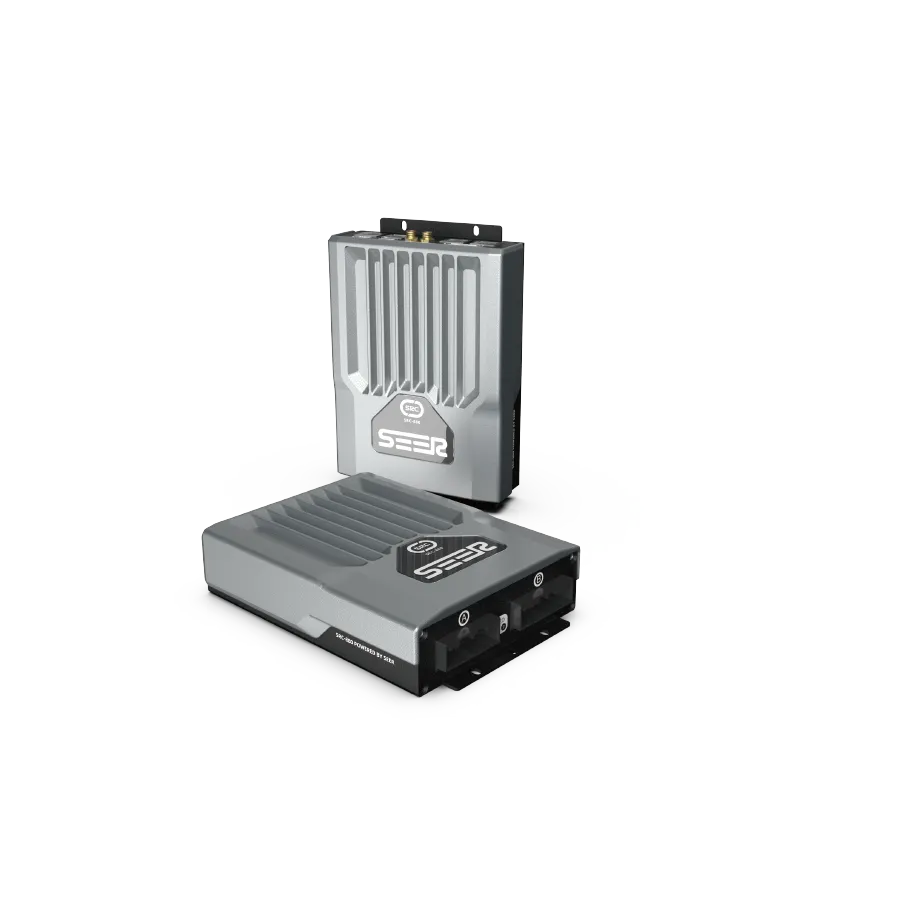
Autonomous forklift robots are a type of intelligent mobile robot that can autonomously perform material handling, lifting and stacking tasks. Unlike traditional AGVs (Automated Guided Vehicles), which are often limited to physical navigation facilities such as magnetic stripes, today’s autonomous forklifts are often classified as Autonomous Mobile Robots (AMRs). Instead of relying on those “dead tracks” underground, they rely on built-in sensors and algorithms to make dynamic decisions in real time. A high-performance forklift control system acts as their core. Their ability to handle complex logic such as real-time mapping, path planning and obstacle avoidance determines whether these machines are truly intelligent.
Why Should Companies Consider Investing In Autonomous Forklifts?
The introduction of robotic forklifts can bring four significant dividends:
- Extreme operating efficiency: The operating speed of these devices can reach up to 2 m/s. This balance between load and speed is what high-frequency logistics warehousing needs most.
- Safety is the default configuration: Modern units are equipped with a comprehensive range of safety features. With 3D obstacle avoidance, front and rear anti-collision strips, and emergency braking, this 360-degree safety system provides users with greater peace of mind. After all, in complex human-machine mixed environments, safety is the top priority.
- Deployment is no longer restricted: Thanks to SLAM (Simultaneous Localization and Mapping) technology, forklifts do not require reflectors or any infrastructure modifications, and the positioning accuracy can reach ±10 mm. This means that when you change the layout of your warehouse, you don’t need to undergo a costly reconfiguration, and you are extremely flexible.
- Highly adaptable: These are not just high-end showpieces; they are practical. From the pallet to the material cage, and then to the shelf, their slim bodies allow them to navigate freely in narrow aisles, making them especially suitable for retrofitting legacy warehouse areas with limited space.
Building A Unified Ecosystem
To maximize the potential of your warehouse storage, these autonomous forklifts must be synchronized with your existing software system. With an RDS (Robot Management System) and an intelligent logistics management system, you can achieve:
- Task distribution automation: According to real-time demand, tasks are automatically assigned to the nearest forklift.
- Intelligent routing optimization: The system calculates the optimal path in real time to avoid traffic jams.
- Interface unification: Whether it is automatic charging stations, elevators or assembly lines, robots can seamlessly dock.
Maintenance And Stability Considerations
In fact, in modern autonomous forklift design, modular architecture has become standard. This design makes maintenance straightforward. In case of a component failure, there is no need to take the entire system offline. As long as the standardization of components is high, maintenance is very convenient, which ensures the reliability required for 24/7 operation.
The Future Of Warehousing
In my opinion, autonomous forklift robots are not just cold hardware; they are the “peripheral nerves” that extend out of the intelligent automation supply chain. Choosing a solution based on a mature controller platform that emphasizes safety, accuracy, and software compatibility will determine whether your warehouse will only maintain operations in the future or become a benchmark for industry efficiency.
Frequently Asked Questions (FAQ)
Q1: How do they perform in narrow aisles?
A: Thanks to their slim bodies and extremely small turning radius, they handle narrow-aisle operations with much more precision and ease than large, manually driven vehicles.
Q2: Can they support long-shift operations?
A: They are designed for continuous operation. As long as they are equipped with intelligent battery management and automatic charging stations, there is no problem in achieving 24-hour uninterrupted operation.
Q3: Can autonomous forklifts operate in areas without Wi-Fi coverage?
A: Most modern autonomous forklifts use SLAM navigation to perceive their surroundings and navigate independently even without a constant connection. However, a stable network like Wi-Fi or 5G is essential for real-time fleet scheduling and syncing with a Warehouse Management System. For facilities with spotty coverage, we recommend industrial-grade access points or offline task-caching modes to ensure continuous operation.
Author: SEER Robotics Technology Expert
I am a Senior Robotics Engineer with over a decade of hands-on experience in warehouse automation. Having spent years debugging complex deployment sites, I specialize in integrating Autonomous Mobile Robots (AMRs) and intelligent scheduling systems to optimize logistics.


/1.png?x-oss-process=image/format,webp)
/1.png?x-oss-process=image/format,webp)
 Contact Us