DATE: 2026/06/02

Pallet Robot Systems Premium Quality Guaranteed

Pallet Robot Systems Premium Quality Guaranteed

Pallet Robot Systems

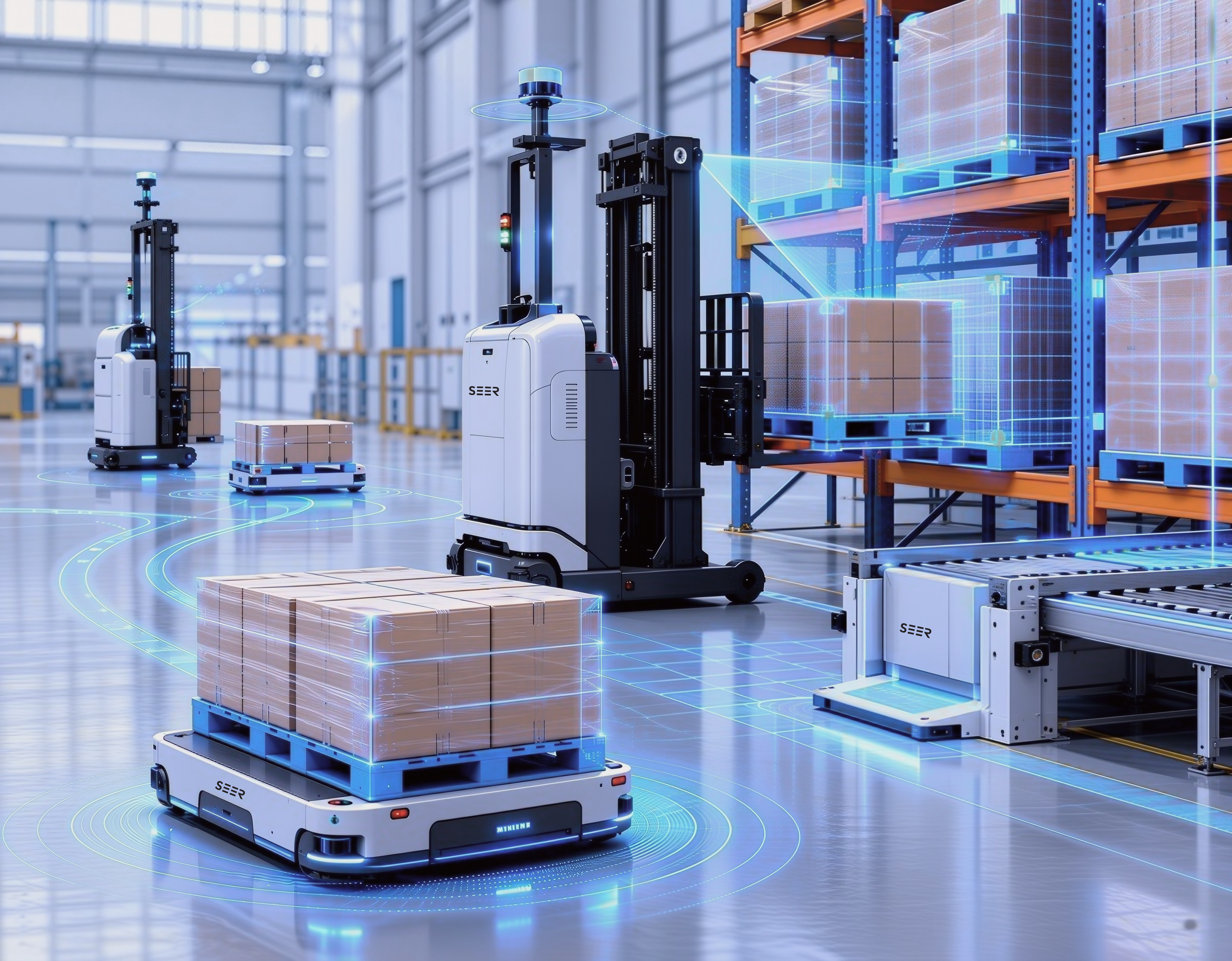
SEER Robotics’ pallet robot systems, powered by the advanced SRC controller, deliver ultra-high‑precision adaptive recognition and flexible, efficient material handling. We are a source factory with our own R&D and manufacturing facilities, eliminating the middleman and supporting large‑volume global procurement. This enables us to offer you highly competitive ex‑factory prices and faster delivery times.

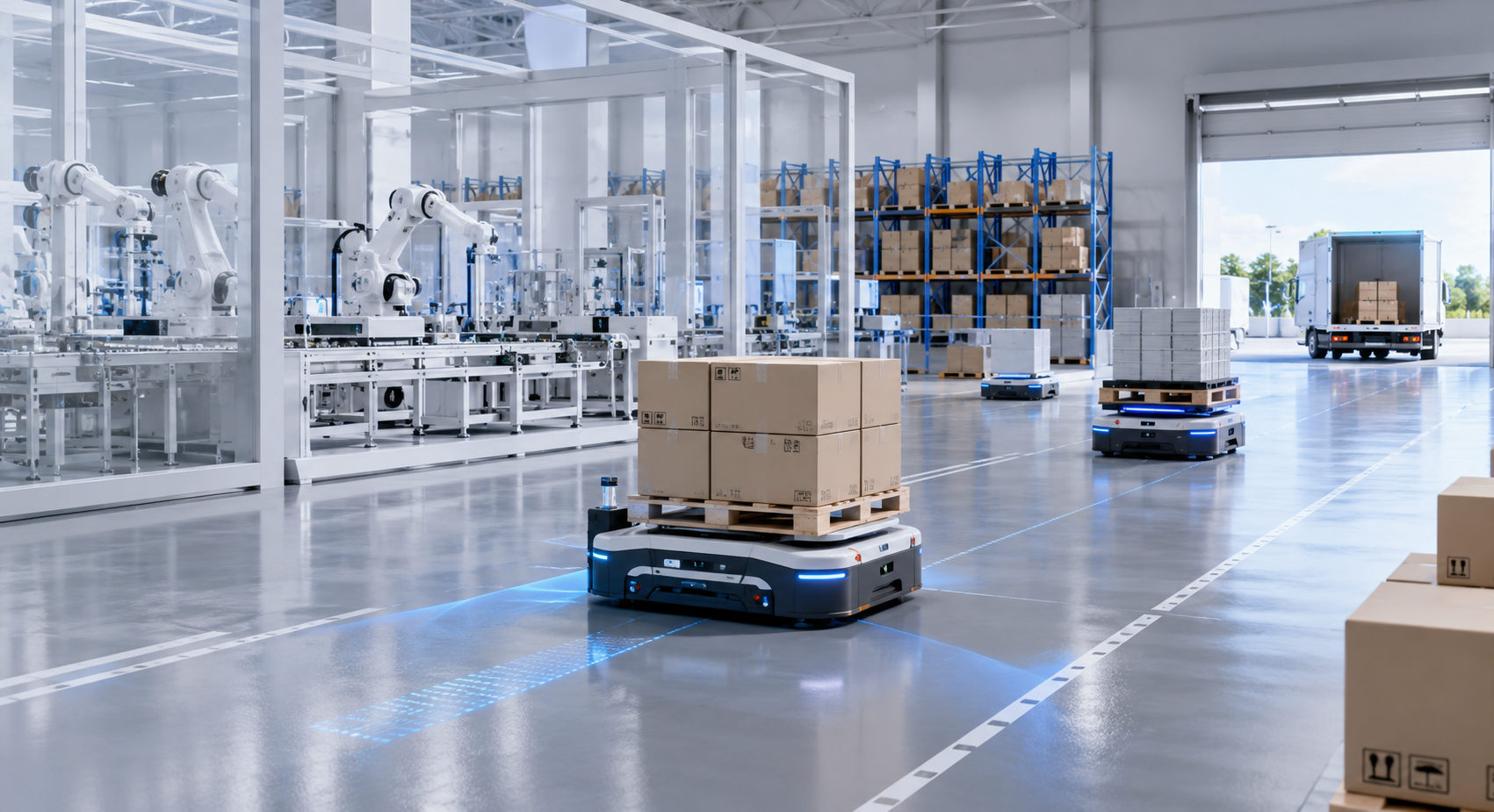
Pallet robot systems are primarily used in automotive manufacturing workshops, new energy battery production lines, 3C electronics assembly plants, and automated warehouse logistics centers.

Navigation method
Laser SLAM
Core Chip
SRC Series
Navigation accuracy
±10mm

Pallet Robot Systems Characteristics

Laser navigation free environment
The use of advanced laser SLAM navigation technology, no need to lay magnetic strips or reflectors on the floor of the workshop, and no need to change the existing site environment can achieve rapid deployment and reduce the overall cost of enterprise site transformation.
Navigation accuracy of plus or minus 10 mm
Based on a high-performance SRC controller, the mechanical arm, vision, and vehicle body realize unified and centralized management, and the navigation accuracy is ± 10 mm, ensuring accurate handling of complex materials.
Oversized loads can be easily handled
The system supports non-standard customization and flexible expansion. The maximum lifting load capacity of non-standard customized mobile robots can reach 1.5T, which can easily meet the handling needs of heavy industry and large pallets.
Intelligent adaptive pallet recognition
A built-in three-dimensional camera and visual AI solution can detect warehouses and goods in real time, automatically identify pallets or racks, and realize accurate fork taking even if the posture of goods is deviated.
360-degree all-round obstacle avoidance
The whole vehicle is equipped with a low-level safety laser scanner and an anti-collision camera to realize 360-degree all-round three-dimensional protection and reduce the risk of man-machine collision in a mixed-line cross-operation environment under complex working conditions.
Multi-vehicle interaction and automatic charging
Support low-power, fully automatic, autonomous charging; cooperate with scheduling system software; realize unified linkage scheduling and collaborative operation of multi-vehicles; effectively release manpower; and improve workshop automation level.
Pallet Robot Systems Structured Detailed Parameter Table
Technical Indicator Classification Core parameter items Standard configuration and performance description
Control and navigation systems Core Central Controller SRC series high-performance controllers
Control and navigation systems Basic navigation mode Laser SLAM Natural Contour Navigation
Control and navigation systems performance navigation accuracy Navigation accuracy can reach ±10mm
Performance and handling parameters Maximum movement speed Operating speed can reach 2m/s
Performance and handling parameters Rated load capacity Standard and non-standard models support weights from 300kg to 1.5T.
Security and Identification Systems Intelligent recognition function Visual AI Real-time Warehouse and Intelligent Cargo Inspection
Security and Identification Systems Safety obstacle avoidance mechanism Low-position LiDAR security scanner 3D protection
Security and Identification Systems Obstacle avoidance detection range 360-degree all-round detection and protection of packages
Power and integrated facilities Charging operation mode To achieve fully automated charging in conjunction with automatic charging stations
Power and integrated facilities Dispatch Management System Digital fleet management system software for unified dispatching

Pallet Robot System Contrast Points

In the current industrial logistics automation market, ordinary handling equipment often relies on fixed-track navigation such as magnetic strips and reflectors, which not only has a long on-site transformation cycle but also lacks flexibility in the face of mixed production. The SEER Robotics pallet robot system successfully upgraded the traditional forklift and material handling equipment to a highly intelligent driverless system with its powerful open integrated control platform. It does not change; any existing workshop layout can be quickly deployed in a few days, greatly shortening the project delivery cycle of the enterprise, and can achieve a small radius of flexible and smooth operation in dense storage space. In addition, most competing products often face the problem that “hands, eyes, and bodies” cannot be managed in a centralized and unified manner, resulting in insufficient accuracy when robots dock multi-height and multi-size shelves or production lines. The SEER Robotics pallet robot system achieves a perfect deep integration of the body chassis, machine vision system, and actuator by carrying the core SRC controller. This not only gives the system a strong visual AI adaptive recognition capability for various types of pallets but also controls the navigation accuracy within ± 10 mm and cooperates with an external multi-function system to ensure that the entire handling chain is efficient, continuous, and safe.

Lorem ipsumLorem ipsumLorem ipsumLorem ipsumLorem ipsumLorem ipsumLorem ipsumLorem ipsumLorem ipsumLorem ipsumLorem ipsumLorem ipsumLorem ipsum Lorem ipsumLorem ipsum
Cross-regional and cross-process high and low roller lines are difficult to connect
SEER Robotics relies on lifting roller robots to adjust height adaptively in real time, eliminate production line drop, and solve the stubborn problem of poor cross-line circulation of complex multi-workshop materials.
Lack of basic network signal coverage leads to loss of connection
The SEER Robotics pallet robot system solves the problem of equipment interruption and shutdown caused by storage dead corners and network blind areas by supporting a high-frequency and high-stability data synchronization mechanism.
High-density mixed-lane man-machine cross-collision is frequent
SEER Robotics fusion, low LiDAR, and anti-collision algorithms for omnidirectional three-dimensional scanning to solve the narrow channel due to the artificial vision blind area caused by the safety hazards.

Pallet Robot Systems Instructions

Power-on self-test and map building
After starting the car body, use a one-stop implementation tool to start LiDAR scanning so that the robot can quickly build a complete digital workshop environment plan in a short time.
01
Handling tasks and route planning
Input pallet handling requirements into the fleet management system software, and the system will automatically optimize the running path according to the built-in algorithm to realize seamless material distribution across regions.
02
AI visual pallet adaptive recognition
When the vehicle enters the station, the visual AI system automatically captures the posture of the pallet or the rack, adaptively corrects the angle of the vehicle body, and ensures that the fork teeth are accurately inserted and smoothly lifted.
03
Automatic recharge and daily sleep
When the device detects low power, it will automatically go to the automatic charging station for fast charging and automatically return to the production line to continue to perform unfinished tasks after the power is sufficient.
04

Pallet Robot Systems For People

3C Electronics and Semiconductor Enterprise Logistics Leader

It is suitable for warehouse management decision makers who manage high-density, material-intensive three-dimensional warehouses or fine workshops and urgently need to introduce intelligent pallet robot systems with extremely small turning radius, high flexibility, and high positioning accuracy to eliminate cross-process transfer bottlenecks.

Operators of large-scale workshops for automobiles and new energy

Suitable for intelligent manufacturing production line supervisors who face heavy-duty handling challenges such as large-tonnage battery packs and large-scale metal racks and require equipment with a maximum carrying capacity of 1.5 T, unified linkage scheduling of multiple models, and an all-round three-dimensional obstacle avoidance safety mechanism.

Supply Chain Director of Traditional Manufacturing and Textile Industry

Suitable for global brand factory operators who need to transform pallet handling in traditional workshops from manual mode to fully automatic unmanned mode and expect to quickly see production efficiency improvement and effective control of labor management costs in a short time.

Industrial automation solution system integrator

Suitable for downstream factory non-standard custom intelligent forklifts or pile-high logistics systems due to the core hardware and software underlying interface incompatibility and slow development; need to find one with an open supply chain and low-code rapid deployment tools from the one-stop core control platform research and development personnel.

Certificates And Factories

证书大图

As the world’s leading controller manufacturer, SEER Robotics has independent intellectual property rights of SRC series controllers and production lines. It is the real source manufacturer, providing you with highly competitive ex-factory prices and faster delivery speed. Products comply with international standards and have been deployed in many countries and regions around the world. Through standardized communication protocols, the stable operation and technical compatibility of the system in multinational plant projects are ensured.

证书小图

FAQ

Question 1: Does the pallet robot system have any special requirements for the existing factory floor?
Answer 1: The system uses advanced laser SLAM natural contour navigation technology, does not need to lay any artificial marks such as magnetic strips, reflectors, or QR codes on the ground, and can be quickly deployed without changing any existing workshop environment.
Question 2: How does the system ensure the success rate of picking pallets with unfixed placement positions and deviated angles?
Answer 2: The system has a built-in visual AI solution, which can detect warehouses and goods in real time, identify the three-dimensional contour information of various pallets and racks in real time, automatically calibrate the fork angle, and realize accurate adaptive insertion even if there is a certain deviation angle.
Question 3: How can the equipment ensure the safety of workshop personnel when the workshop passages are narrow and there is man-machine cross-working?
Answer 3: The whole vehicle is equipped with high-level and low-level security. LiDAR scanners and anti-collision cameras form a 360-degree all-around, three-dimensional obstacle avoidance protection network. Once a pedestrian or sudden obstacle is detected ahead, the system will automatically slow down or emergency brake.
Question 4: If the basic network signal in some areas of the factory is not good, will the system be directly paralyzed?
Answer 4: The system has excellent local autonomous operation and disconnection data synchronization technology. In the network blind area, the pallet robot can still rely on the on-board control system and sensors to safely execute the current handling instructions and synchronize the running log and status in real time after reconnecting to the network.
Question 5: In the face of heavy industry and the new energy industry, what is the maximum lifting and handling load of the system?
Answer 5: The system has strong non-standard expansion and customization capabilities, and the rated load of standard models covers the mainstream specifications starting from 300kg. Through deep customization of heavy-duty models, the maximum cargo lifting and efficient and stable handling can be achieved up to 1.5T.
Question 6: How to dispatch multiple handling robots of different models and functions in one system at the same time?
Answer 6: Through the supporting fleet management system software, enterprises can realize unified interaction, linkage operation, and flexible scheduling of multiple models, including pallet forklifts and lifting robots; break the information island; and solve the global logistics circulation problem across factories and processes.