DATE: 2026/03/20
What Is Smart Factory
The core of the smart factory is actually the Industrial Internet of Things (IIoT), Autonomous Mobile Robots (AMRs) and fleet management systems. These components are woven together into a network. This is not as simple as buying a few advanced devices. The real difficulty is how to make these various components—from robot controllers to ERP and MES systems “understand” each other’s languages. The essence of the smart factory is a modular architecture, connecting the original fragmented hardware through a centralized data layer. In this way, the equipment is no longer an island, but can be adjusted in real time according to demand, and the real production and background data management are fully integrated and synchronized.
Weaving Technology Into A Network
Understanding how the smart factory runs depends on how it stitches together scattered technical points:
- Industrial Internet of Things (IIoT): It’s like the nerve endings of a factory. Every sensor is capturing data in real time. Without these raw data points, the so-called intelligent decision-making is groundless.
- Autonomous Mobile Robots (AMRs): Modern AMRs can navigate autonomously and will automatically detour when encountering obstacles. This is the flexibility that the workshop should have.
- Fleet Management System (FMS): This is the “commander” behind the robots. It is responsible for dismantling tasks, scheduling traffic, and ensuring that each robot is doing the most cost-effective task.
The Power of Universal Controllers
Many traditional factories struggle with upgrades because diverse equipment speaks different “languages”. The key to a modular architecture is not just adding a software layer, but implementing Universal Controllers as the hardware foundation.
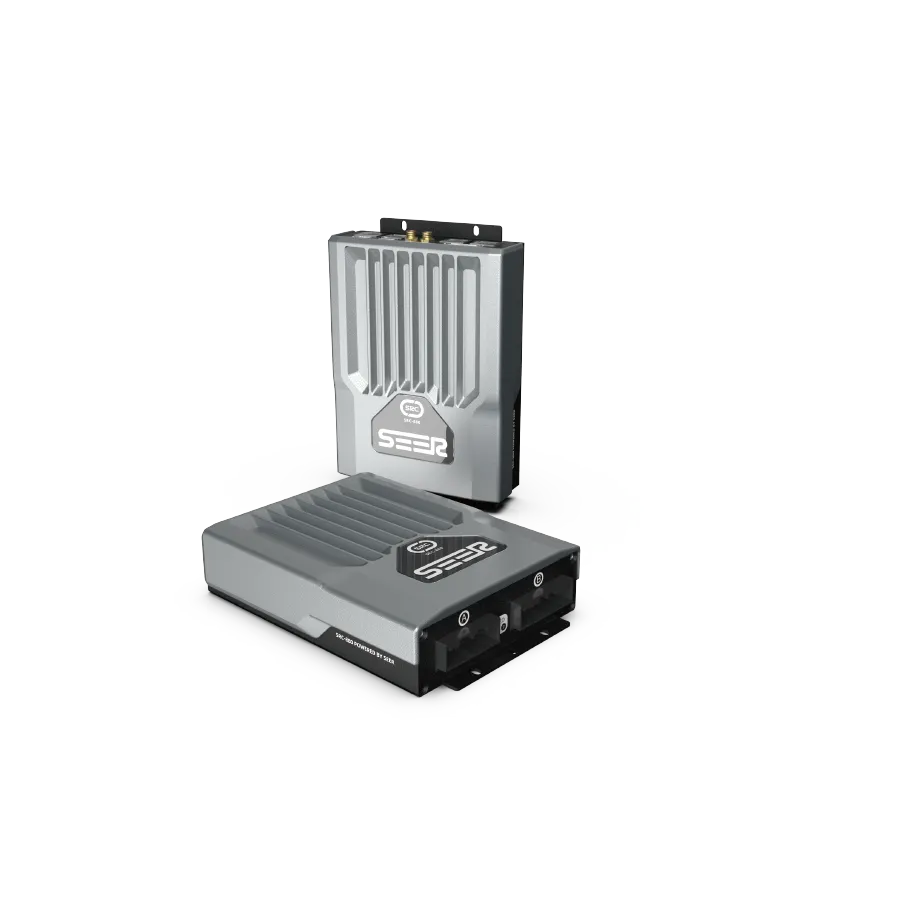
Think of the Universal Controller as a “standardized brain” for any mobile robot. By using a powerful, unified controller (such as the SEER Robotics SRC series), factories can ensure that different types of vehicles—whether they are AMRs, automated forklifts, or picking robots—share the same communication protocols and logic from the start. This approach offers several straightforward benefits:
- Breaking through protocol incompatibility: With a universal controller, information is standardized at the source, allowing seamless exchange between the workshop floor and the ERP/MES systems.
- Simplified expansion (Plug-and-Produce): You can add new robot types without rebuilding the entire system. Just “plug” the standardized controller into new hardware, and it’s ready to work.
- Data transparency: Management no longer deals with fragmented reports. Real-time, high-precision data flows directly from the controllers to the dashboard.
Benefits of Smart Factories
I have observed three key changes that typically occur in factories when they synchronize physical execution and digital supervision:
- Automatic path planning: Once the production line is stuck, the system will automatically let the robot detour without manual intervention, and the material flow will not stop at all.
- Predictive maintenance: There is no need to wait for equipment to break down. By using IIoT data to track wear characteristics and checking for hidden dangers during scheduled downtime, factories can save a large amount of money by avoiding unexpected breakdowns and downtime.
- Real-time optimization of production capacity: When market demand changes, output needs to be adjusted and product types changed. System parameters can then automatically adjust to maintain efficiency at a high level.
To Sum Up
The smart factory is definitely not just a simple equipment replacement; it is a complete architectural revolution. As long as you integrate the Internet of Things, robots and digital systems in place, the otherwise lifeless production line can become a self-regulating organism. In the current competitive environment, this is not only a technical choice, but also the only way to maintain enterprise flexibility.
Frequently Asked Questions (FAQ)
Q1: Do I need to replace all my existing equipment to build a smart factory?
Not necessarily. The beauty of a modular architecture and Universal Controllers is that they can often be retrofitted onto existing hardware. By using a standardized controller, you can give “old” machines a modern brain, allowing them to communicate with new AMRs and software systems without a total equipment overhaul.
Q2: What is the difference between traditional AGVs and the AMRs mentioned here?
Traditional Automated Guided Vehicles (AGVs) usually follow fixed paths (like magnetic strips or wires). Autonomous Mobile Robots (AMRs) use the IIoT and advanced sensors to navigate dynamically. They can “see” their environment, plan their own routes, and bypass obstacles without human intervention, providing the flexibility required for a true smart factory.
Q3: Why is a “Universal Controller” so important?
In most factories, different robots come from different brands, each speaking a different digital “language”. This creates data silos. A Universal Controller acts as a translator and a standardized platform. It ensures that whether you are running a forklift or a small picking robot, the data format, safety protocols, and communication logic are identical, making fleet management much simpler.
Author: SEER Robotics Technology Expert
I’m an industrial automation strategist with over 13 years of experience in shop floor optimization. I specialize in breaking down silos between legacy hardware and modern digital systems.


/1.png?x-oss-process=image/format,webp)
/1.png?x-oss-process=image/format,webp)
 Contact Us